
Liability vs. Full Coverage Car Insurance: Which to Pick
Liability insurance covers damage you cause to other people and their property. Full coverage adds protection for your own vehicle through collision and comprehensive policies. That one difference costs an extra $78 per month on average, and whether it's worth it depends on your car's value, your financial situation, and whether you still owe on a loan [1][2].
Here's how to figure out which level of coverage makes sense for you.
Paying too much for either option? Enter your zip code to compare rates from top carriers in about 2 minutes. It's free, with no obligation.
Liability vs. Full Coverage at a Glance
| Liability Only | Full Coverage | |
|---|---|---|
| Monthly cost (national avg) | $72 | $150 |
| Annual cost | $866 | $1,803 |
| Covers other driver's injuries/damage | Yes | Yes |
| Covers your car in a crash | No | Yes |
| Covers theft, weather, vandalism | No | Yes |
| Required by lenders | No | Yes |
Last updated: March 2026 [1][2]
Full coverage costs roughly 2.1 times more than liability alone [1][2]. But as you'll see below, a single accident can cost far more than the annual premium difference.
What Liability Insurance Covers (and What It Doesn't)
Liability insurance is the minimum coverage required in nearly every state [3]. It pays for two things when you cause an accident:
- Bodily injury liability: medical bills, lost wages, and legal costs for people you injure
- Property damage liability: repair or replacement costs for vehicles and property you damage
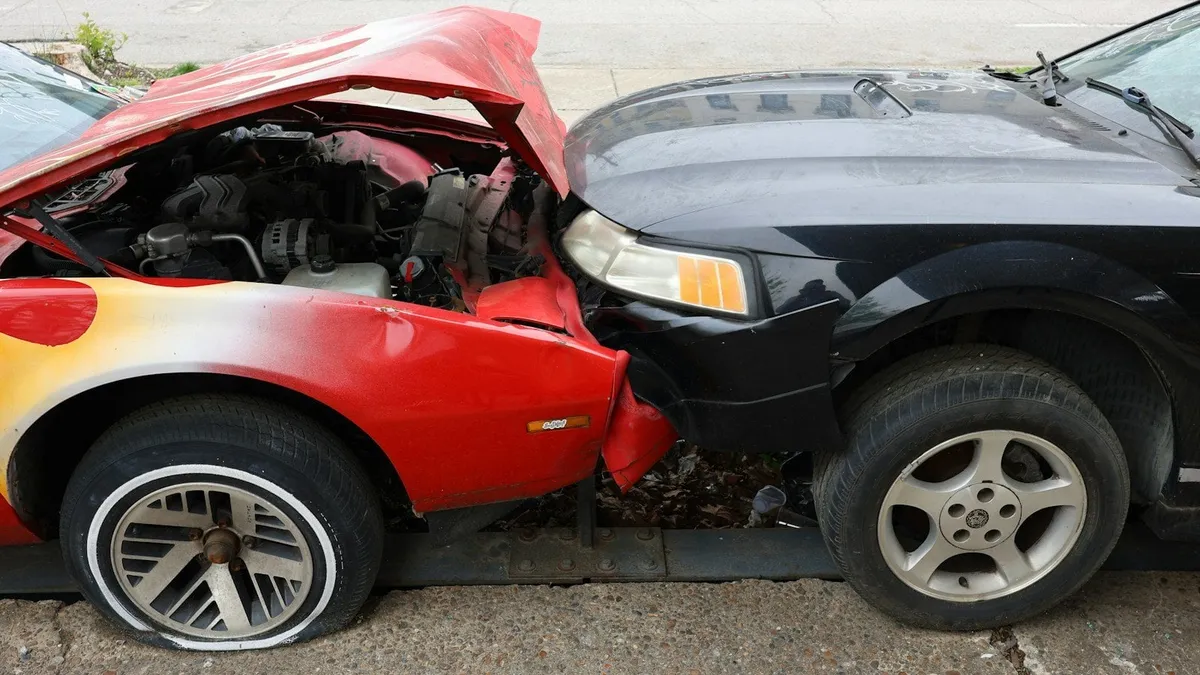
What liability does not cover is your own car. If you rear-end someone and your vehicle needs $8,000 in repairs, liability pays for their damage. You pay for yours out of pocket.
Liability also won't help if your car is stolen, damaged by hail, or hit by a deer. For those situations, you need additional coverage types.
Every state sets its own minimum liability limits. A common minimum is 25/50/25, meaning $25,000 per person for injuries, $50,000 total per accident for injuries, and $25,000 for property damage [3]. Several states recently increased their minimums, including California, North Carolina, and Virginia [3].
What "Full Coverage" Actually Means
"Full coverage" is not an official insurance term. It's shorthand for a policy that bundles three types of protection [4]:
- Liability: covers others (required by law)
- Collision: covers your car after a crash, regardless of fault
- Comprehensive: covers your car for theft, weather, vandalism, animal strikes, and falling objects
Despite the name, full coverage has limits. It won't cover gap insurance shortfalls, rental car costs during repairs, or medical bills for you and your passengers (those require separate add-ons like MedPay or PIP).
If you're financing or leasing a vehicle, your lender almost certainly requires full coverage until the loan is paid off [4]. Dropping it without their approval can trigger force-placed insurance, which costs significantly more and only protects the lender [5].
How Much More Does Full Coverage Cost?
Full coverage costs an extra $937 per year (about $78 per month) compared to liability only, according to QuoteFii's analysis of NAIC and BLS data [1][2]. The national average for full coverage is $1,803 per year ($150/month), while liability only averages $866 per year ($72/month).
But averages only tell part of the story. Several factors push the gap wider or narrower:
Vehicle type matters. A luxury sports car averages $3,006 per year for full coverage, while a minivan runs $1,291 per year [6]. Higher-value and higher-performance cars cost more to repair and replace, which makes the collision and comprehensive portion of full coverage more expensive.
Credit score matters. Drivers with excellent credit pay about $120 per month for full coverage, while those with poor credit pay around $212 per month [7]. In states where credit is a rating factor, the credit gap can exceed the liability-to-full-coverage gap itself.
Your driving record matters. A clean record keeps you near the average. A speeding ticket raises full coverage to about $195 per month, one at-fault accident pushes it to roughly $216 per month, and a DUI to about $261 per month [8].
For a detailed look at what shapes your specific rate, see our guide on how much you should pay for car insurance.
When Liability Only Makes Sense
Liability-only coverage saves an average of $937 per year compared to full coverage and can be the right call when your car's value is low enough that collision and comprehensive premiums exceed the potential payout [1][2]. Consider liability only in these situations:
- Your car's value is low. If your car is worth $4,000 or less and you're paying $400 or more per year for collision and comprehensive, the premiums may exceed what you'd recover from a claim after your deductible.
- You can replace the car out of pocket. If totaling your vehicle would be an inconvenience rather than a financial crisis, self-insuring through liability only saves you $937 per year on average.
- You own the car outright. No lender means no coverage requirements beyond your state minimum.
- You rarely drive. A car that sits in the garage most days has lower collision risk, making the extra premium harder to justify.
The key question: if your car were totaled tomorrow, could you handle replacing it without going into debt? If yes, liability only may be the more cost-effective choice.
When Full Coverage Is Worth the Extra Cost
Full coverage is worth the extra $78 per month when you cannot afford to replace your vehicle out of pocket or when a lender requires it [1][2]. It earns its premium in these situations:
- You're financing or leasing. Your lender requires it, and dropping it triggers force-placed insurance at a much higher cost [5].
- You can't afford to replace your car. If a total loss would leave you without transportation or force you to take on debt, the $78/month difference is a bargain.
- Your car is worth more than $10,000. The potential payout from a covered claim easily justifies the premium difference at this value level.
- You park outside or drive in high-risk areas. Comprehensive covers theft, hail, and vandalism. In areas with severe weather or high theft rates, this coverage can pay for itself in a single event.
Consider this: the average collision claim paid out by insurers is $7,191 [9]. If you're driving a car worth $15,000 and carrying only liability, one at-fault accident could cost you more than seven years of full coverage premiums.
The 10% Rule for Dropping Collision and Comprehensive
A widely used rule of thumb: consider dropping collision and comprehensive when the combined annual premium for those two coverages exceeds 10% of your car's current market value [10].
Here's how to apply it:
- Look up your car's value on Kelley Blue Book or NADA Guides.
- Check your insurance declarations page for the collision and comprehensive portion of your premium (not the total policy cost).
- Divide the annual collision + comprehensive premium by your car's value.
Say you drive a 12-year-old sedan worth $5,000. Your collision and comprehensive coverage costs $600 per year. That's 12% of the car's value, which means you're spending more than the 10% threshold. If you can handle a $5,000 loss, switching to liability only would save you $600 per year.
On the other hand, if you drive a $25,000 SUV and your collision + comprehensive runs $800 per year (3.2% of value), full coverage is well within the reasonable range.
One important caveat: the 10% rule is a starting point, not a firm cutoff. If you know you can't afford to replace your car, keep the coverage regardless of the math.
How to Lower Your Full Coverage Cost Without Dropping It
If full coverage is the right choice but the cost feels steep, here are proven ways to pay less:
- Raising your deductible. Going from $500 to $1,000 saves 8 to 10% on collision and comprehensive premiums [11].
- Bundling policies. Combining auto and renters or homeowners insurance often saves 5 to 15%.
- Comparing quotes regularly. Drivers who shop around save a median of $461 per year, according to a Consumer Reports survey of 40,000+ drivers [12].
- Asking about discounts. Many carriers offer savings for safe driving records, low mileage, autopay enrollment, and other discounts you might be missing.
Even small adjustments can bring full coverage costs closer to liability-only territory, especially if you haven't compared rates in over a year.
What Happens If You Cause an Accident with Liability Only?
With liability-only coverage, your insurance pays for the other driver's injuries and vehicle damage up to your policy limits. It pays nothing toward your own car.
If your vehicle is damaged, you cover the full repair cost yourself. If it's totaled, you absorb the entire loss. There's no collision claim to file and no check from your insurer.
This is where the average claim cost of $7,191 becomes relevant [9]. On a $3,000 car, that total loss stings but may be manageable. On a $20,000 car, it's a serious financial hit.
Also keep in mind: liability limits only protect you up to the amounts on your policy. If you cause $60,000 in injuries and carry 25/50 limits, you could be personally responsible for the difference. Consider whether your state's minimum requirements provide enough protection for your situation.
Frequently Asked Questions
Is "full coverage" required by law?
No. States require liability insurance (or a financial responsibility equivalent), not full coverage. However, lenders and leasing companies require full coverage until your loan or lease is paid off [4].
Does full coverage pay for a totaled car?
Yes, up to the car's actual cash value minus your deductible. If your car is worth $12,000 and you have a $1,000 deductible, the maximum payout is $11,000. If you owe more than the car is worth, you'll need gap insurance to cover the difference.
Can I switch from full coverage to liability mid-policy?
Yes. You can change your coverage level at any time. If you've paid off your car loan, contact your insurer to remove collision and comprehensive. The rate change typically takes effect within one billing cycle.
How do I know my car's current value?
Check Kelley Blue Book (kbb.com) or NADA Guides (nadaguides.com). Enter your year, make, model, mileage, and condition for a fair market estimate. This is the number to use when applying the 10% rule.
Should I keep full coverage on a new car I bought outright?
Generally, yes. Even without a lender requirement, a new car represents a significant financial asset. Until the car has depreciated enough that you could absorb a total loss comfortably, full coverage protects that investment.
The Bottom Line
Liability insurance meets your legal obligation. Full coverage protects your car. The right choice depends on three things: what your car is worth, whether you owe money on it, and whether you could replace it out of pocket.
If you're paying for full coverage on a car that's barely worth the annual premium, you may be overspending. If you're carrying liability only on a vehicle you can't afford to lose, you may be underprotected.
Either way, the biggest factor in what you pay is which carrier you choose. Drivers who compare rates save a median of $461 per year [12].
Ready to find out what you should be paying? Enter your zip code to compare quotes from top carriers. It takes about 2 minutes, it's free, and there's no obligation.
Sources
[1] National Association of Insurance Commissioners, "2022/2023 Auto Insurance Database Report," content.naic.org; Bureau of Labor Statistics, "Consumer Price Index: Motor Vehicle Insurance," bls.gov
[2] QuoteFii analysis of rate data from Bankrate and ValuePenguin (March 2026). See methodology.
[3] Connecticut General Assembly, "Comparison of 50-State Minimum Auto Insurance Requirements," cga.ct.gov
[4] NAIC, "A Consumer's Guide to Auto Insurance," content.naic.org
[5] Consumer Financial Protection Bureau, "What is force-placed insurance?" consumerfinance.gov
[6] MoneyGeek, "Average Cost of Car Insurance by Vehicle Type" (March 2026), moneygeek.com
[7] MoneyGeek, "How Credit Score Affects Car Insurance Rates" (March 2026), moneygeek.com
[8] MoneyGeek, "How Driving Record Affects Car Insurance Rates" (March 2026), moneygeek.com
[9] National Association of Insurance Commissioners, "2022/2023 Auto Insurance Database Report: Average Incurred Loss per Collision Claim," content.naic.org
[10] Insurance Information Institute, "When should I drop collision and/or comprehensive coverage?" iii.org
[11] Insurance Information Institute, "How can I save money on my auto insurance?" iii.org
[12] Consumer Reports, "Why Most Drivers Switch Car Insurance, and How Much They Save," consumerreports.org
This article is for informational purposes only and does not constitute insurance, financial, or legal advice. Information may contain errors or be outdated. Always verify details with a licensed insurance professional before making coverage decisions.
Related Articles

$500 vs. $1,000 Car Insurance Deductible: Which Saves More?
Should you raise your car insurance deductible to $1,000? See the break-even math, claim frequency data, and when each option makes sense for your budget.
Mar 17, 2026 · 5 min read

Do I Need Uninsured Motorist Coverage? Three Questions
About 1 in 7 drivers carries no insurance. Here's a three-question decision guide to whether uninsured motorist coverage is worth it for you.
May 19, 2026 · 8 min read

Stacked vs Unstacked Uninsured Motorist: Which Pays More?
Stacked UM combines limits across vehicles; unstacked caps payout per car. Same accident in PA vs FL can pay double or half. Here's what your state allows.
May 18, 2026 · 7 min read