
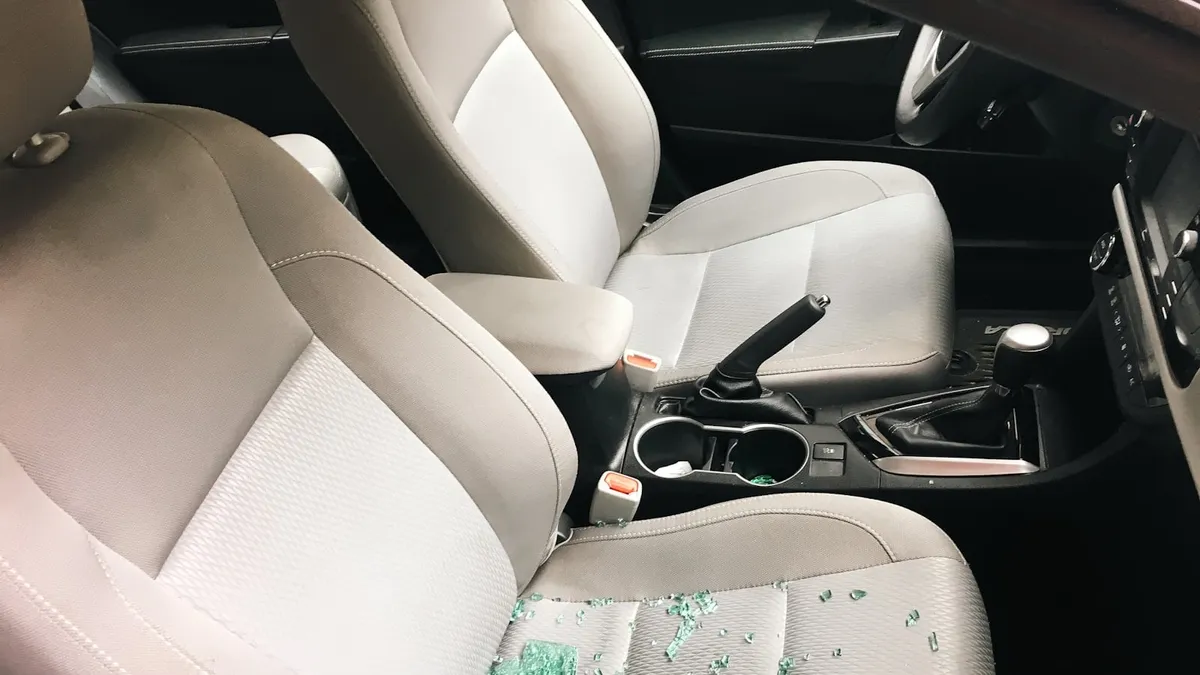
Does Car Insurance Cover Vandalism? What to Do Next
A smashed window, keyed door, or broken mirror can leave you wondering what to touch, whom to call, and whether the repair is covered. Does car insurance cover vandalism? It generally can when comprehensive coverage was active on the damaged vehicle and the loss fits the policy terms. Liability-only coverage does not repair your own car, while collision coverage is meant for crash damage [1].
Start with evidence. Photograph the car before cleaning it, protect openings from further damage, keep related receipts, and notify your insurer [2].
Say you find a keyed door, broken side glass, and a missing mirror after parking overnight. Those items may share one cause, or an inspection may reveal different causes. Record each item separately rather than deciding the entire coverage answer at the curb.
Does car insurance cover vandalism?
Comprehensive coverage generally pays for covered intentional damage that is not caused by a collision. The Texas Department of Insurance specifically lists vandalism among the events comprehensive coverage pays for, while collision pays to repair or replace your car after an accident [1]. Check the declarations page for the deductible.
Use the cause, damaged property, and policy terms to sort the likely claim path:
| What happened | Coverage that may apply | What to verify |
|---|---|---|
| Someone keyed paint, smashed glass, sprayed graffiti, or damaged parked-car parts | Comprehensive | Coverage date, deductible, exclusions, and inspection requirements |
| Another vehicle struck the car | Collision or the responsible driver's property damage liability | Impact evidence, fault decision, and collision deductible |
| Someone stole the entire car | Comprehensive | Coverage date, deductible, theft documentation, and policy terms |
| Someone stole a loose phone, bag, or laptop from inside | Not established by the auto coverage described here | Auto-policy terms, any separate policy terms, and proof of ownership |
| Normal wear, corrosion, or mechanical failure caused the damage | Usually not a vandalism claim | Cause of damage, maintenance records, and policy exclusions |
| You damaged another person's property | Liability | Responsibility, liability limits, and claim process |
Last updated: July 2026 [1][3]
The NAIC also separates comprehensive, collision, and liability by what each one protects [3]. State-required liability does not establish first-party vandalism coverage. Check the state requirements table and state auto-rules directory, then read our comprehensive versus collision guide. See the car theft guide when the whole car or parts are missing.
If the current loss has already happened, handle it under the policy that was active then. Once the claim is stable, you can review future coverage with matching limits and deductibles.
What counts as car vandalism?
Car vandalism is intentional damage to a vehicle without the owner's permission. Common examples include keyed paint, smashed windows, broken lights or mirrors, damaged locks, and graffiti. A damaged or missing tire, part, or accessory still needs its cause and policy category established. Coverage depends on the facts and contract, so an example is not a payment promise [1].
Document mixed damage item by item. A broken window may be part of a break-in. A crushed door could show an impact.
A flat tire might have a visible cut, road damage, wear, or another cause. Wide photos establish the overall scene, while close photos preserve marks that may help an adjuster or repair shop identify what happened.
Photograph loose glass, sharp metal, leaking fluids, hanging trim, warning lights, and damaged doors before moving anything. For glass-specific repair questions, use our windshield coverage guide.
What to do after your car is vandalized
Work in an order that protects you, the evidence, and the vehicle. Texas regulators recommend recording police-report information when available, taking photos and video of all damage, preventing more damage, and keeping expense receipts [2].
1. Check safety before touching the car
Look for broken glass, leaking fluids, loose parts, damaged tires, obstructed windows, missing mirrors or lights, and doors that will not open. Keep children and pets away. If you are unsure whether the car can be driven, ask a qualified repair facility, towing provider, or local authority before moving it.
Do not confront anyone you suspect. Call emergency services if there is an immediate threat.
2. Photograph the scene and every damage area
Take wide photos of all sides of the car, its parking position, nearby debris, and the surroundings. Then take close photos and video of each scratch, break, cut, missing part, and possible impact point. Capture visible camera locations and nearby property damage without entering restricted areas.
Suppose you return from a trip with recent parking photos that show an undamaged car. Save the original before-and-after files with their dates. They can help establish timing, but they do not prove who caused the damage or guarantee coverage.
3. Look for witnesses and camera records
Write down contact details for anyone who saw or heard something. Ask nearby property staff how to preserve relevant video. Keep any available lead with the claim records.
4. Preserve police-report information when available
If you make a police report, record the report number and agency information [2]. Describe what you observed without guessing about the person or cause.
There is no single nationwide rule that every department responds in person or every policy requires the same document. Ask your insurer what records it needs and keep the answer.
5. Protect the car from more damage
After documenting the scene, cover a broken opening or arrange secure towing when needed. Use temporary protection that does not erase evidence or create more damage. Keep receipts and photograph the vehicle before and after the temporary work [2].
Do not authorize permanent repairs until you understand the inspection process. Save removed parts when practical and ask the insurer or shop before discarding them.
6. Notify the insurer and preserve the claim file
Report facts: where the car was, when you last saw it undamaged, when you found the damage, what you observed, and which police agency you contacted. Ask whether comprehensive was active, which deductible applies, how inspection works, and what records are required.
Keep the claim number, adjuster contact details, photos, videos, report information, estimates, receipts, and messages in one folder. Texas regulators advise taking notes on calls and making a list of what the company needs [2].
When does car insurance cover vandalism, and is a claim worth filing?
Compare a complete repair estimate with the comprehensive deductible, then consider safety, vehicle use, financing, claim duties, and uncertainty about hidden damage. The deductible is the portion of a covered claim assigned to you. Texas regulators explain that it is subtracted from payment when you use your own insurance [1][2].
Do not base the decision on one visible scratch or broken pane. Request an itemized estimate that considers:
- Paint preparation and refinishing across affected panels
- Glass, seals, moldings, and cleanup
- Tires, wheels, lights, mirrors, locks, and trim
- Cameras, sensors, wiring, and calibration
- Water entry, interior damage, and diagnostics
- Towing, storage, and temporary protection
Then compare the eligible total with the deductible shown on your declarations page. If the covered repair amount is below the deductible, that coverage would not produce a payment. If the estimate is close, ask whether inspection could reveal additional related damage and whether the policy requires prompt notice even when you might pay directly.
There is no reliable nationwide promise about how one vandalism claim affects future price. State rules, claim history, policy details, and insurer practices vary. Make the decision from the repair and coverage facts. Our deductible guide explains the out-of-pocket calculation.
How inspection and repair estimates work
An adjuster may inspect the car in person or review damage photos to estimate repairs. Texas regulators say you may take the car to a shop, get more than one estimate, show the shop the insurer's estimate, and discuss differences or other damage the shop finds [2].
Compare the insurer and shop documents line by line. Check the part, labor, repair method, material, diagnostics, calibration, tax, deductible, and any prior-damage adjustment. Ask each side to explain a difference plainly.
A first estimate may change after disassembly. Before the shop performs additional work, ask how it will document related damage and submit a revised estimate or supplement. Preserve photos and diagnostic results that connect the new finding to the reported event.
For example, a smashed side window can lead to glass inside the door, damaged trim, a bent regulator, wet upholstery, or an electronic fault. The initial glass line may not include those items. A clear shop note and photos make the disagreement specific.
Do not argue only that the total feels low. Identify the exact omitted panel, part, operation, or condition. Ask the insurer to respond in writing and keep the response with the claim record.
After the immediate damage and estimate are under control, compare future policy options on the same terms. Keep deductibles and selected coverages equal so a lower quote does not hide less protection.
Stolen items, attached parts, financed cars, and total loss
Do not assume vehicle equipment and loose belongings share the car's vandalism coverage. Texas regulators say auto policies commonly exclude stereos and other equipment that is not permanently installed [1]. That source does not establish coverage for attached equipment as a class. Ask the auto insurer to classify each damaged or missing item, and ask any property insurer to review loose belongings separately.
Make separate inventories for vehicle damage and loose belongings. Include descriptions, serial numbers, receipts, and photos when available. Ask which items belong under each policy before filing.
If the car is financed, notify the lender and ask what documents it requires. Both Texas regulators and the NAIC say lenders require comprehensive and collision when money is still owed on the car [1][3]. Do not assume every lease or loan handles repairs, checks, or total losses the same way. Request instructions in writing.
Imagine an older financed car with keyed paint, broken glass, a damaged mirror, and broken lighting. The complete estimate may prompt a valuation review.
Texas regulators say an insurer might total a car when repair cost is close to its current value [1]. The exact decision still depends on state rules and claim facts. Review our total-loss settlement guide before accepting a valuation.
How to challenge omitted damage or a denial
Start with the exact disputed decision. An omitted repair item, a cause disagreement, a valuation issue, and a coverage denial each need different evidence. Texas regulators say a company that rejects a claim must state why in writing, and they direct drivers to discuss estimate differences or additional shop findings with the insurer [2].
Send a short written challenge containing:
- The claim number and loss date
- The decision or estimate line you dispute
- The policy section, photo, report, estimate, or diagnostic record involved
- The specific correction or explanation you request
- The attached evidence, labeled clearly
Keep the request focused. “The left mirror is missing from the estimate; see shop line 14 and photos 8 through 10” is easier to review than a long message that mixes every frustration together.
If the response does not resolve the issue, follow the policy's review process and contact your state insurance department. Our denied claim guide explains how to organize the file, while the insurance commissioner complaint guide covers the regulator route.
Frequently Asked Questions
Does insurance cover a keyed car?
Yes, comprehensive insurance generally covers intentional key damage when that coverage was active and the loss meets the policy terms. Photograph every affected panel before cleaning or repair, check the deductible, and get a complete estimate. Liability-only coverage does not repair your own keyed car [1].
Does insurance cover slashed tires?
It depends. The cited regulator guide establishes that vandalism can fall under comprehensive, but it does not separately establish payment for a damaged tire [1]. Photograph the tire and surrounding damage, avoid driving when the tire is unsafe, and ask the insurer to determine the cause, policy category, deductible, and inspection requirements before replacement.
Do I need a police report for a vandalism claim?
If you make a police report, keep the incident or report number [2]. Response methods and insurer requirements vary, so ask the claim handler which record it needs.
Does auto insurance cover items stolen from inside the car?
The cited auto guide does not establish coverage for attached equipment or loose belongings as a class. It says equipment that is not permanently installed is commonly excluded [1]. Inventory vehicle damage, equipment, and personal items separately, then ask each relevant insurer which policy terms, limits, deductible, and proof requirements apply.
Can a vandalized car be totaled?
Yes, extensive vandalism can lead to a total-loss review. Texas regulators say an insurer might total a car when repair cost is close to its current value [1]. There is no universal threshold for every state. Request the valuation report and itemized estimate, then correct factual errors with records and photos.
Will a vandalism claim raise my car insurance price?
There is no automatic nationwide answer. State rules, claim history, insurer practices, policy details, and other permitted factors can affect future pricing or renewal. Ask how the claim will be recorded and compare future quotes using identical coverage limits and deductibles.
Protect the evidence, then review future coverage
The most useful answer to “does car insurance cover vandalism?” starts with the policy and a clean record of what happened. Take these steps:
- Check safety before touching or driving the car.
- Photograph the scene, each damage area, and temporary protection.
- Preserve police-report information when available.
- Confirm comprehensive coverage and the deductible.
- Compare the insurer and shop estimates line by line.
- Challenge omitted damage or a denial with focused written evidence.
Resolve the current loss before changing coverage. Then decide whether your comprehensive deductible and related options still fit the amount you could comfortably pay after another incident. When you are ready, start with your zip code. QuoteFii can help you compare future rates while keeping selected limits, coverage, and deductibles consistent.
Sources
[1] Texas Department of Insurance, “Auto Insurance Guide,” Auto Insurance Guide
[2] Texas Department of Insurance, “Steps to Getting Your Home or Car Insurance Claim Paid,” Steps to Getting Your Home or Car Insurance Claim Paid
[3] National Association of Insurance Commissioners, “What Does Auto Insurance Cover?,” What Does Auto Insurance Cover?
This article is for informational purposes only and does not constitute insurance, financial, or legal advice. Information may contain errors or be outdated. Always verify details with a licensed insurance professional before making coverage decisions.
Compare related decisions
More guides that help put this topic in context.
Related Articles

$500 vs. $1,000 Car Insurance Deductible: Which Saves More?
Should you raise your car insurance deductible to $1,000? See the break-even math, claim frequency data, and when each option makes sense for your budget.
Mar 17, 2026 · 5 min read
Does Car Insurance Cover Engine Damage? A 2026 Guide
Car insurance may cover engine damage caused by a covered crash or event, but not ordinary breakdown. Learn how to document damage and review your policy.
Aug 17, 2026 · 13 min read
Does Car Insurance Cover Pothole Damage? Claims Guide
Does car insurance cover pothole damage? Learn when collision may apply, what damage to inspect, how deductibles work, and how public-road claims stay separate.
Aug 12, 2026 · 14 min read